

 CAN
CAN
 US
US


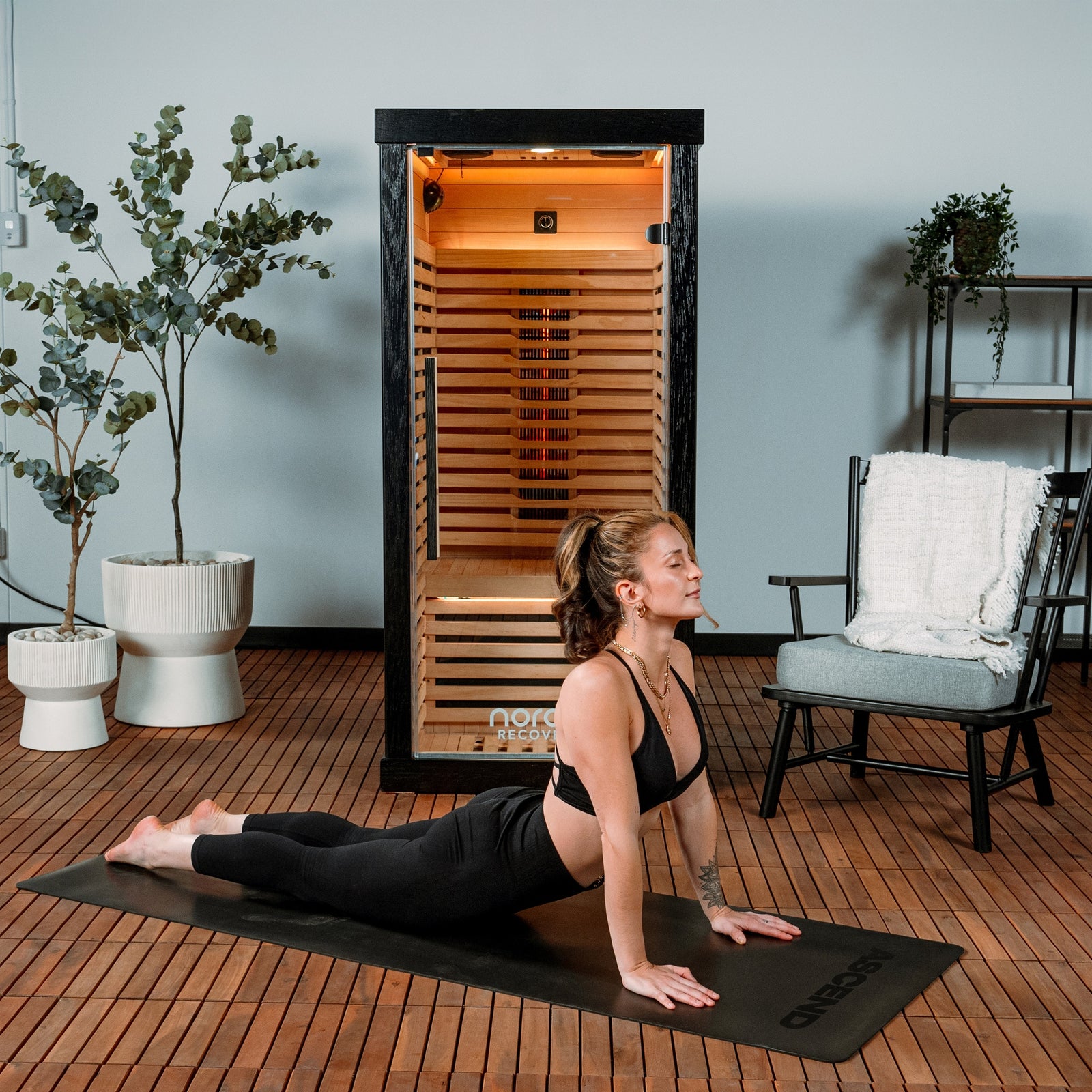
Wait 15–30 minutes after training so your heart rate settles, drink ~500 ml of water, then sit for 15–20 minutes — 50–65 °C in an infrared sauna or 70–90 °C in a traditional one. Finish with a cool (not ice-cold) shower and rehydrate with 500–1000 ml of water plus electrolytes. Beginners: start with one 10–15 minute round, 1–2× per week.
- Never go straight in: cool down 15–30 minutes first so your heart rate returns to near-resting.
- Hydrate before and after: ~500 ml going in, 500–1000 ml plus electrolytes coming out.
- Temperature by type: infrared 50–65 °C (120–150 °F); traditional 70–90 °C (160–195 °F).
- Duration: 10–15 min for beginners, 15–20 min once acclimated.
- Infrared heats deeper: penetrates muscle at a lower, more comfortable temperature — ideal for DOMS.
- Sauna is not weight loss: the scale drop is water weight and returns on rehydration.
Why use a sauna after a workout?
A post-workout sauna session is more than a relaxing reward — it's a strategic recovery tool. The physiological effects run deep, touching everything from muscle repair to long-term endurance.
Faster muscle recovery and less soreness
Sauna heat increases blood circulation, delivering oxygenated blood to fatigued muscles and helping clear metabolic byproducts. The result is faster repair, reduced inflammation, and real relief from delayed onset muscle soreness (DOMS) — for both strength and cardio training.
Better endurance and heat tolerance
Regular heat exposure drives adaptations like increased blood plasma volume and improved cardiovascular efficiency, sharpening your body's ability to manage heat stress — a genuine competitive edge.
A boost to growth hormone
Research indicates heat exposure can elevate plasma growth hormone, which is central to muscle repair and growth — so a sauna actively supports the adaptations you train for.
Why infrared supercharges it
Infrared saunas heat your body directly rather than the surrounding air, so heat penetrates deeper into muscle and joints at a lower, more comfortable temperature — more targeted relief, more efficiently.
| Benefit | Mechanism | Why it matters |
|---|---|---|
| Reduced DOMS | Increased circulation clears metabolic byproducts | Train again sooner, with less discomfort |
| Improved endurance | Higher blood plasma volume, better thermoregulation | Lower heart rate at the same effort |
| Growth hormone response | Heat stress elevates plasma GH | Supports muscle repair and growth |
| Deep-tissue relief (infrared) | Radiant heat penetrates muscle directly | Targeted relief at a lower temperature |
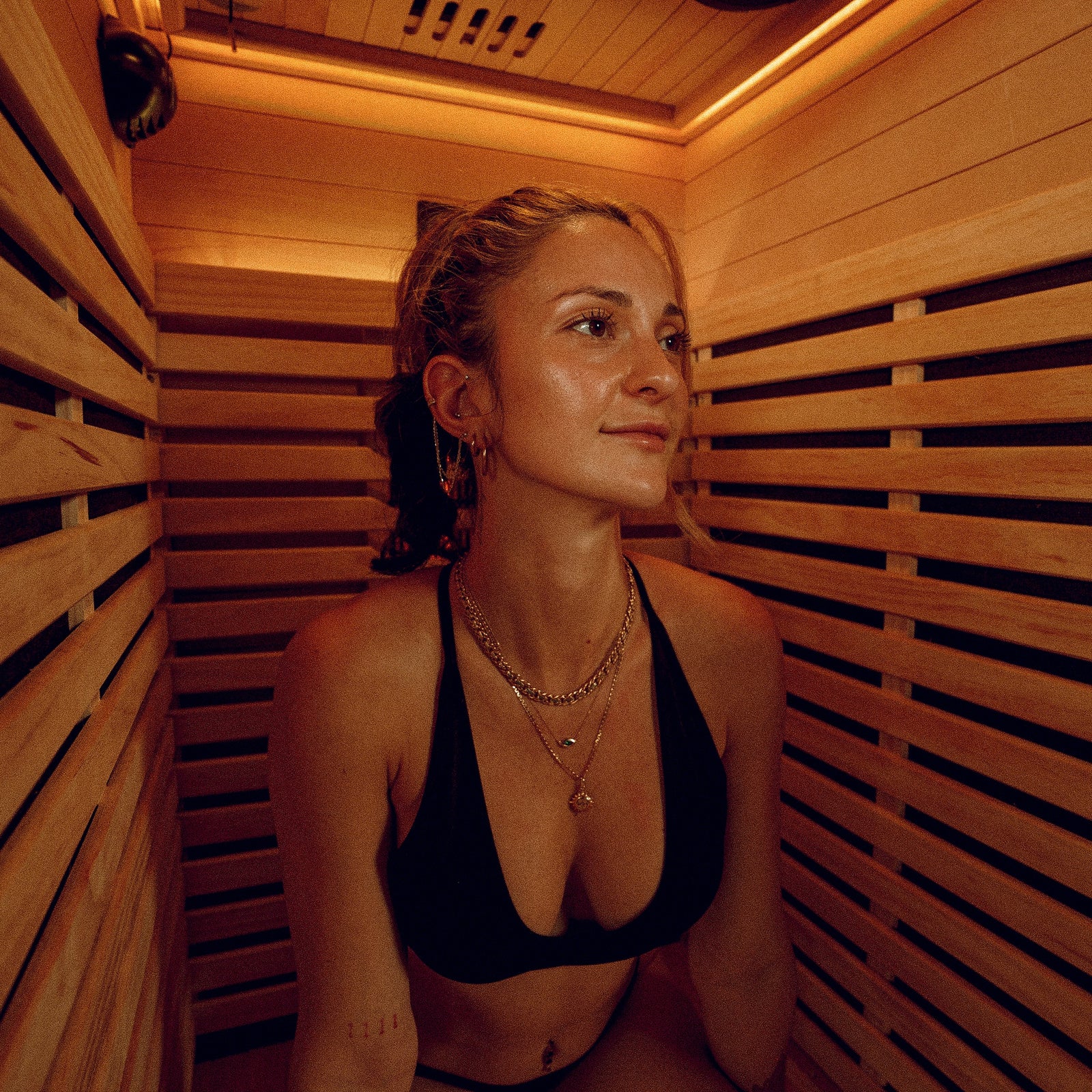
The step-by-step post-workout sauna protocol
Step 1 — Cool down and wait
Never go directly from your last rep into the heat. Do a 5–10 minute cool-down of light stretching or walking, then wait 15–30 minutes so your heart rate returns to near-resting before you enter.
Step 2 — Pre-sauna hydration
During that wait, drink at least 500 ml (16 oz) of water. Add an electrolyte powder to replace minerals lost during training.
Step 3 — Set temperature and duration
Match the settings to your sauna type and experience level (see the table below). When in doubt, start cooler and shorter.
Step 4 — Your in-sauna routine
Sit or lie down comfortably and focus on slow, steady breathing. Gentle stretching is fine; strenuous effort is not. If you feel dizzy or unwell, exit immediately.
Step 5 — Cool down and rehydrate
Finish with a lukewarm or cool (not ice-cold) shower to rinse off and gradually lower your temperature. Then rehydrate with 500–1000 ml of water plus electrolytes to replace sodium, potassium, and magnesium.
| Infrared | Traditional | |
|---|---|---|
| Temperature | 50–65 °C (120–150 °F) | 70–90 °C (160–195 °F) |
| Beginner duration | 10–15 min, lower end of range | 10–15 min, lower end of range |
| Advanced duration | 15–20 min, or 2–3 rounds | 15–20 min, or 2–3 rounds |
| Wait after workout | 15–30 minutes, always | |
Hydration is non-negotiable. You'll sweat heavily on top of an already-depleted workout state. Drink before, sip during if needed, and rehydrate fully after — skipping this is the fastest route to dizziness and a wasted session.
Beginner vs. advanced: how to tailor your protocol
Your routine should evolve as your body adapts to heat. Start conservative and progress only when sessions feel comfortable and restorative — not like an endurance test.
| Level | Duration | Temperature | Frequency |
|---|---|---|---|
| Beginner | One 10–15 min session | Lower end of range | 1–2× per week |
| Advanced | 20 min, or contrast therapy (2–3 cycles) | Mid-to-high end of range | 3–4× per week |
Contrast therapy (advanced): 15–20 minutes in the sauna, then a 1–5 minute cold shower or plunge, repeated for 2–3 cycles. Alternating heat and cold acts as a circulatory pump that helps flush metabolic waste and reduce soreness.
Critical sauna safety tips after exercise
Rules to follow every time
- Hydrate before, during if needed, and after.
- Listen to your body — leave immediately if you feel dizzy, nauseous, or unwell.
- Avoid alcohol before or during a session; it raises dehydration and blood-pressure risk.
- Cool down first — always wait at least 15 minutes after exercising.
Who should be cautious
The main risks are dehydration and heat exhaustion from improper use. Anyone with unstable cardiovascular conditions (like uncontrolled high blood pressure), certain heart conditions, or who is pregnant should consult a doctor before using a sauna.
Common misconceptions
- It's not fat loss: the weight lost is water and returns on rehydration.
- It's not a cool-down: a sauna raises core temperature — your real cool-down happens before you enter.
- It's not for everyone: when in doubt, check with a physician first.
The athletes who get the most from a post-workout sauna aren't the ones who sit in the longest — they're the ones who cool down first, hydrate like it matters, and treat the session as part of the training plan, not an afterthought.— Nordik Product Specialist, Montreal
Frequently asked questions
How long should you use a sauna after a workout?
Beginners: 10–15 minutes. Intermediate and advanced users: 15–20 minutes. Consistent, moderate sessions beat pushing your limits and risking dehydration — always exit if you feel dizzy or uncomfortable.
What is the ideal temperature for a post-workout sauna?
It depends on the type. Traditional saunas: 70–90 °C (160–195 °F). Infrared saunas: 50–65 °C (120–150 °F), because the heat penetrates the body directly. Beginners should start at the lower end.
Is it safe to use a sauna immediately after exercising?
No. Wait 15–30 minutes so your heart rate drops and your body begins cooling naturally. Entering with an elevated heart rate puts excess strain on your cardiovascular system.
What should I drink after a sauna session?
Water with an electrolyte supplement to replace sodium, potassium, and magnesium lost through sweat. Coconut water is a good natural alternative. Avoid sugary drinks and alcohol, which worsen dehydration.
Find your perfect sauna in 2 minutes
Answer a few quick questions about your budget, size etc. and get matched to the right sauna. Plus price-drop alerts.
How we sourced this guide: protocols reflect published research on post-exercise heat exposure, hyperthermic conditioning, and hydration, combined with practical guidance from Nordik's product specialists. This article is educational and not medical advice — consult your doctor before starting sauna use, especially with a cardiovascular condition or during pregnancy.