

 CAN
 US


The short answer: home sauna cost ranges in Canada
Here’s the full picture at a glance.
Typical Canadian home sauna prices (CAD, mid-2026). Unit only — install/electrical extra.
| Sauna type | Typical price (CAD) | Best for | Wiring |
| Portable / plug-in infrared (1 person) | $499 – $1,500 | Apartments, trying it out | Standard 120V |
| Indoor infrared (1–2 person) | $2,000 – $4,000 | Most homes, energy-efficient | Standard 120V |
| Indoor infrared (3–4 person, premium) | $4,000 – $16,000 | Families, low-EMF luxury | 120V (often a 20A circuit) |
| Indoor traditional Finnish | $6,000 – $11,000+ | Classic high-heat löyly | 240V dedicated circuit |
| Outdoor sauna (barrel / small cabin) | $5,000 – $10,750 | Backyards, year-round use | Wood-fired or 240V |
| Outdoor cabin / luxury sauna | $7,000 – $23,000+ | Premium backyard builds | 240V |
Bottom line: most Canadian buyers spend $3,000–$10,000 all-in for a quality home sauna they’ll use for 15–20 years.
Sauna cost by type — and what your budget actually buys
Infrared saunas — budget-friendly and energy-efficient. Infrared heats your body directly rather than the air, so it runs at lower temperatures, installs almost anywhere, and costs the least to operate. In the broader market a 2–3 person cabin runs $4,400–$9,000, climbing to $10,000–$16,000 for premium imports. Direct-to-consumer brands sit well under that — Nordik Recovery’s full-spectrum, low-EMF (under 2 mG) infrared saunas in solid Canadian Hemlock run $1,999 (1-person), $2,999 (2-person), and $4,499 (3-person).
Install tip most guides miss: every Nordik infrared sauna runs on a standard 120V household outlet (the 3-person uses a dedicated 20A circuit). No costly 240V wiring or $2,000+ panel upgrade — a real saving versus traditional saunas.
Traditional Finnish saunas — classic heat, higher running cost. These use an electric or wood-fired heater for high-temperature “löyly” heat. Indoor units run $6,000–$11,000+, typically need a 240V dedicated circuit, and cost more to operate.
Outdoor saunas — built for the Canadian backyard. Cedar barrel saunas start around $6,500 in the market; cabin and luxury builds reach $15,000–$23,000. Nordik’s Sanctuary outdoor saunas start at $5,499 (2–3 person) and $7,499 (4–6 person), and pair perfectly with a cold plunge.
What your budget gets you (with matching Nordik Recovery models).
| Your budget | What it buys | Nordik example |
| Under $1,000 | Portable infrared or entry cold barrel | Portable Sauna $499 |
| $2,000–$3,000 | 1–2 person infrared, low-EMF | 1-Person $1,999 · 2-Person $2,999 |
| $4,000–$6,000 | 3-person infrared or outdoor cabin | 3-Person $4,499 · Sanctuary 2–3 $5,499 |
| $7,000+ | Large outdoor or premium cold plunge | Sanctuary 4–6 $7,499 · Prestige Plunge $7,999 |
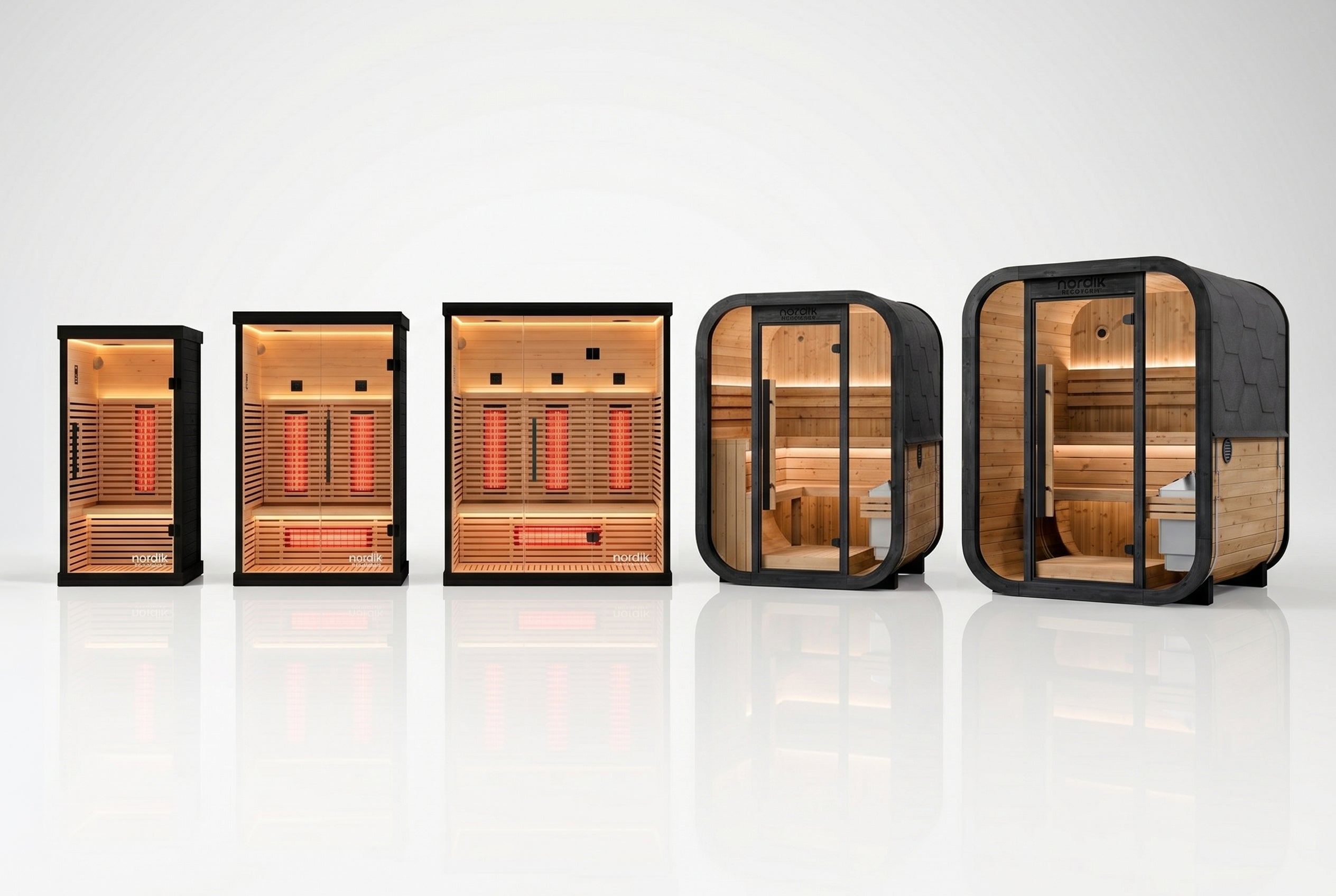
Nordik’s infrared range spans 1–3 person models, all in solid Canadian Hemlock.
[calculator-cost]
The hidden costs nobody quotes you upfront
The sticker price is rarely the final number. Budget for:
- Electrical: infrared usually plugs into 120V. Traditional and large outdoor saunas need a 240V circuit ($500–$1,500); a panel upgrade is $2,000–$5,000+.
- Foundation / pad (outdoor): gravel/concrete pad or helical piles below the frost line, $500–$3,000.
- Delivery & assembly: $100–$300 for small units; up to $2,500 for large units into tight spaces.
- Permit (sometimes): varies by municipality — see below.
Rule of thumb: add 15–25% to the sticker price for a realistic all-in budget — or far less if you choose a plug-in infrared model.
Operating cost by province
Infrared saunas cost about $10–$16/month with typical use; traditional saunas cost more. But the same sauna costs different amounts to run depending on your provincial electricity rate.
Relative sauna running cost by province (general 2026 standings — rates change).
| Province | Residential rate | Running cost |
| Quebec (Hydro-Québec) | Lowest in Canada | Cheapest to run |
| Manitoba / BC | Low | Low |
| Alberta (ATCO / Direct) | Variable / market | Moderate |
| Ontario (time-of-use) | Mid–high (run off-peak) | Moderate |
| Maritimes (NS / NB / PEI) | Highest | Most expensive |
Tip: in Ontario, running your sauna during off-peak hours meaningfully lowers cost.

Outdoor saunas are built to run through −30 °C Canadian winters.
Do you need a permit? Rules by province
Most indoor plug-in saunas need no permit. Outdoor saunas and any hardwired electrical work often do:
- Electrical permit: generally required wherever a 240V circuit is installed — and electrical work must be done by a licensed electrician (and inspected) in every province.
- Building permit (outdoor structures): depends on size, foundation, and permanence — check your municipality.
- HOA / setback rules: confirm property-line setbacks before building.
Cold-climate cost factors
Building for −30 °C winters affects the budget:
- Foundations below the frost line (often 1.2–1.5 m) or helical piles for outdoor units.
- A correctly sized heater so the sauna still heats fast in deep winter.
- Insulation and vapor barriers rated for freeze–thaw cycles.
- Snow-load roofing on cabin saunas.
These protect your investment and prevent the far costlier problem of a sauna that underperforms in real Canadian winters.
Total cost of ownership: the number that matters
Sticker price ≠ true cost. Over a realistic 15–20 year lifespan:
Illustrative 5-year total cost of ownership.
| Cost component | Infrared (3-person, 120V) | Outdoor cabin (traditional) |
| Purchase | $4,499 | $7,499 |
| Electrical / foundation | $0–$300 (plugs in) | $2,000 |
| Operating (5 yr) | ~$720 | ~$1,500 |
| 5-year total | ~$5,300 | ~$11,000 |
| Cost per use (4×/week) | ~$5.10 | ~$10.60 |
Compared to a sauna spa membership at $30–$60 per visit, a home sauna typically pays for itself in 1–2 years.
How to budget for a sauna (step by step)
- Pick type by use case (infrared = efficiency/recovery; traditional = classic heat; outdoor = backyard + cold plunge).
- Size it to who’ll actually use it.
- Check your electrical — most infrared plugs into 120V; traditional needs 240V.
- Add hidden costs (15–25%, or near zero for plug-in infrared).
- Check permits for your province.
- Factor operating cost for your hydro provider.
- Compare total cost of ownership, not sticker price.
Is a home sauna worth the cost?
For regular users, yes. Beyond the lifestyle and recovery benefits, a home sauna adds resale appeal, replaces ongoing spa fees, and — with infrared’s low purchase and running cost — is cheaper to own long-term than most people expect.
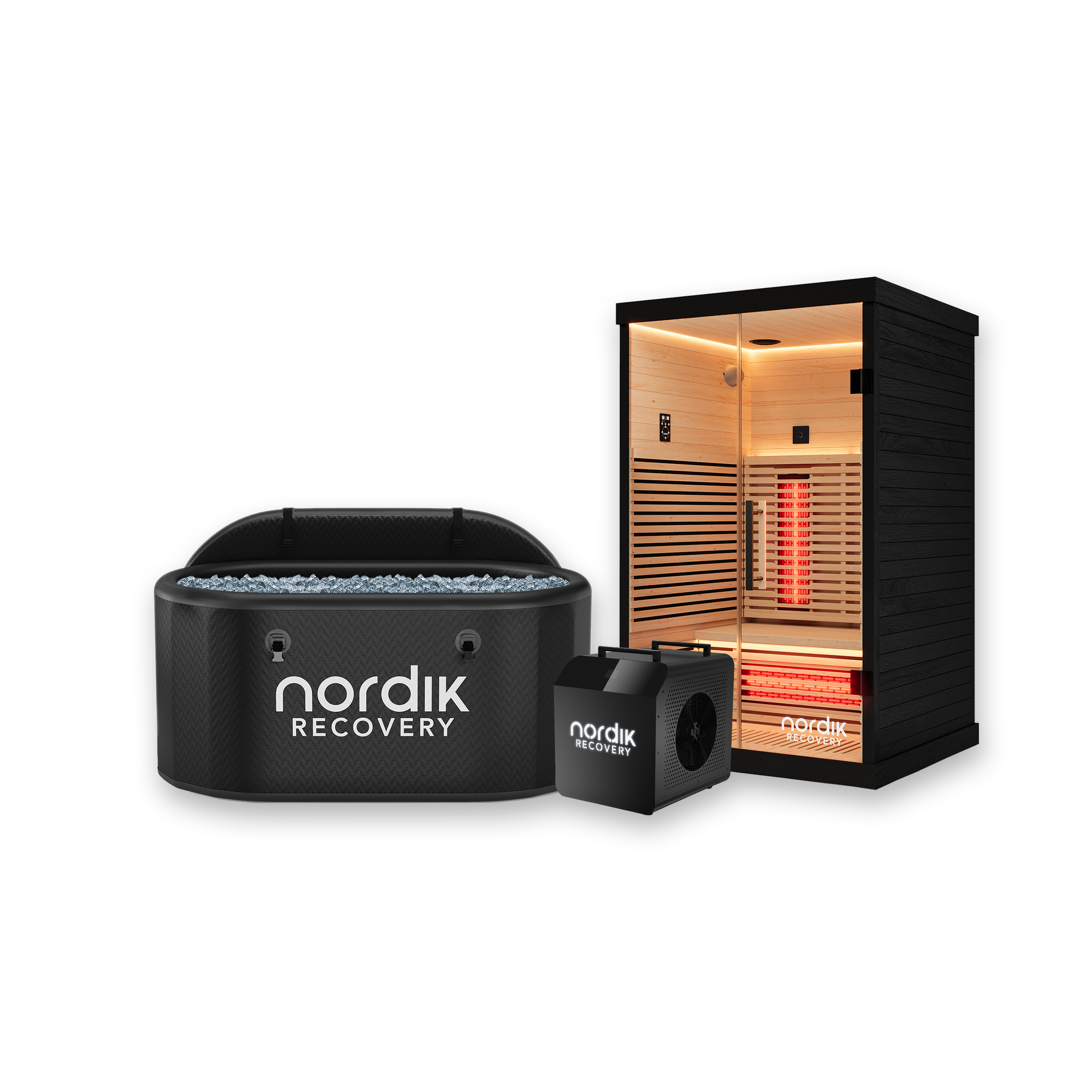
Pairing a sauna with a cold plunge completes the contrast-therapy routine.
The mistake I see Canadians make is shopping on sticker price alone. The right question isn’t “what’s the cheapest sauna” — it’s “what’s the lowest total cost of ownership for how I’ll actually use it.” In our climate, a well-insulated unit that plugs into a standard outlet costs less over five years than a cheap one you fight with every winter.
— Nordik Product Specialist, Montreal