

 CAN
CAN
 US
US


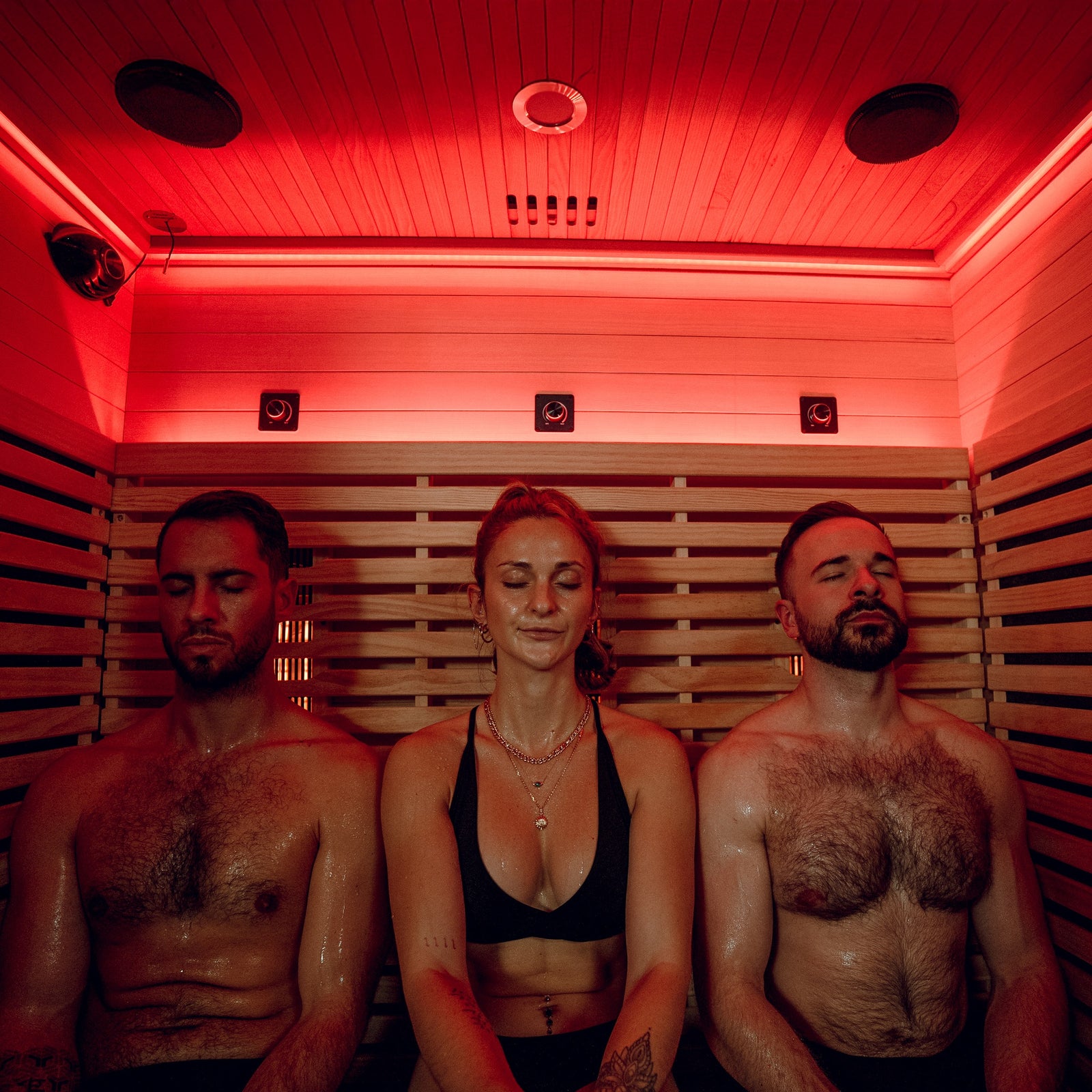
For athletic adaptation, treat heat as controlled stress: 15–30 minute sessions at 80–100 °C (traditional) or 60–70 °C (infrared), 3–5× per week. This triggers heat shock proteins and elevates growth hormone, while raising blood plasma volume to improve endurance and VO2 max. Pair with a cold plunge for contrast therapy — 2–4 cycles, always finishing cold — to maximize recovery.
- Heat is a hormetic stressor: controlled heat stress drives adaptation, not just relaxation.
- Heat shock proteins (HSPs): repair damaged proteins and cut oxidative stress for faster recovery.
- Growth hormone: high-temperature sessions can elevate plasma GH for repair and hypertrophy.
- VO2 max & endurance: higher blood plasma volume lowers heart rate at the same workload.
- Protocol: 15–30 min at 80–100 °C (or 60–70 °C infrared), 3–5× per week.
- Contrast therapy: 2–4 sauna-to-plunge cycles, finishing cold, for peak recovery.
The elite athlete's edge: advanced physiological benefits
For dedicated athletes, basic recovery is the starting point. The competitive advantage lives in the margins — leveraging advanced physiological mechanisms to push performance boundaries. Applied correctly, controlled heat initiates a cascade of hormonal and cellular adaptations that translate into strength, endurance, and resilience.
What are heat shock proteins — and how do they help?
Sauna heat acts as a hormetic stressor: a beneficial stress that makes your body adapt and grow stronger. It stimulates heat shock proteins (HSPs) — your cells' first responders — which repair damaged proteins and reduce oxidative stress, accelerating muscle repair and lowering inflammation after hard training.
How do saunas increase growth hormone?
Targeted heat stress naturally optimizes the endocrine system. Research shows sauna sessions can raise plasma growth hormone — a hormone central to muscle hypertrophy, tissue repair, and metabolic health — giving you a clean way to enhance your body's own regenerative capacity.
Can sauna use improve VO2 max and endurance?
Yes — and the science is clear. Post-exercise sauna bathing can increase blood plasma volume, which improves your blood's oxygen-carrying capacity and core-temperature regulation during intense effort. The result: a lower heart rate at the same workload, better cardiovascular efficiency, and a measurable rise in VO2 max — the gold standard of aerobic fitness. This heat acclimation trains your body to perform under stress, and can help manage glycogen use by improving energy-system efficiency.
| Mechanism | Physiological effect | Performance payoff |
|---|---|---|
| Heat shock proteins | Protein repair, less oxidative stress | Faster, more complete recovery |
| Growth hormone response | Elevated plasma GH | Muscle repair & hypertrophy |
| Increased plasma volume | More oxygen delivery, better cooling | Higher VO2 max, more endurance |
| Heat acclimation | Improved thermoregulation | Lower heart rate at same effort |
How to combine sauna with a cold plunge for maximum benefit
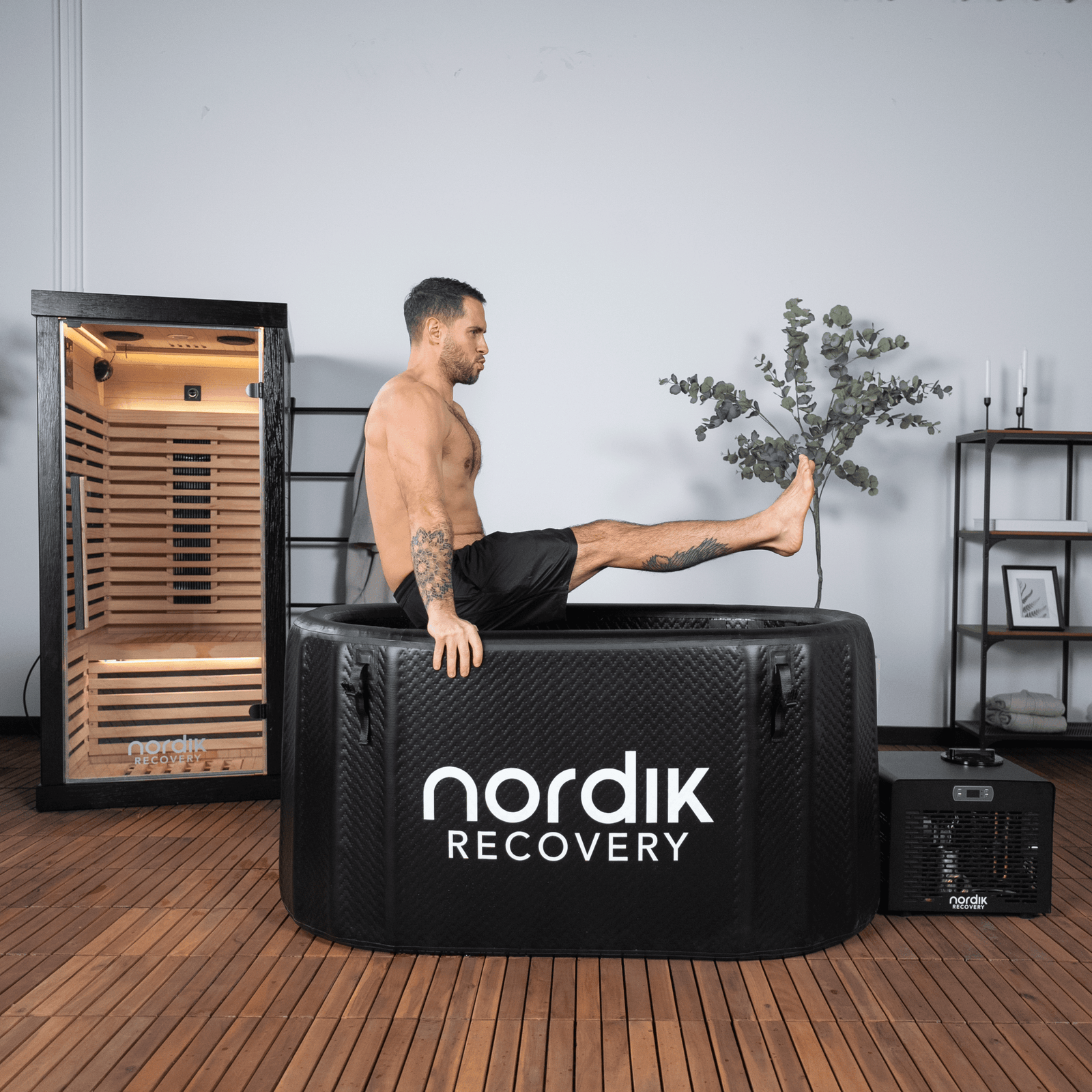
For the ultimate recovery protocol, contrast therapy is unmatched. Alternating extreme heat and cold creates a powerful "pump" on your circulatory system: the sauna drives vasodilation (vessels widen), the plunge drives vasoconstriction (vessels narrow). That alternation acts as a vascular pump — aiding the removal of metabolic waste, reducing inflammation, accelerating recovery, cutting DOMS, and supporting immune function.
A simple, effective contrast protocol:
1. Sauna — 15–20 min at 80–100 °C (176–212 °F).
2. Cold plunge — 1–3 min at or below 10 °C (50 °F).
3. Rest — 2–5 min at room temperature.
4. Repeat — 2–4 cycles, always finishing on cold to maximize anti-inflammatory benefit.
Fine-tuning your sessions: optimal protocols for athletes
Generic advice won't cut it for high performers. Dial in temperature, duration, and frequency to the adaptation you're chasing — and favour multiple shorter rounds over one long sit when you're targeting hormonal responses.
| Variable | Traditional | Infrared |
|---|---|---|
| Temperature | 80–100 °C (176–212 °F) | 60–70 °C (140–158 °F) |
| Duration | 15–30 min, or 2–3 rounds of 15 min with breaks | |
| Frequency | 3–5 sessions per week for adaptation | |
| For HGH / acclimation | Higher end of temperature range, multiple rounds | |
Separating sauna fact from fiction
Myth 1 — A sauna substitutes for exercise. It can raise your heart rate like light cardio, but it doesn't build muscle, improve cardiovascular health the same way, or burn significant calories. It's a powerful complement to training, not a replacement.
Myth 2 — Saunas are a "detox" solution. Your liver and kidneys are your body's filtration systems. Sweat carries only trace toxins — it isn't a primary detox pathway.
Myth 3 — Saunas cause permanent weight loss. The immediate drop is water weight, regained on rehydration. Sauna use can support metabolic health, but it isn't a weight-loss tool on its own.
Essential safety guidelines
- Hydrate before, during, and after every session.
- Listen to your body — exit immediately if dizzy, lightheaded, or unwell.
- Pregnancy: consult your doctor first; the concern is raised maternal body temperature.
- Sickness: avoid the sauna when sick, especially with a fever.
- Infrared safety: high-quality far-infrared saunas emit no harmful UV radiation, and there's no scientific evidence linking them to cancer.
- Attire: keep it minimal — a clean towel is ideal for sweat evaporation; avoid synthetic clothing.
The athletes who see real adaptation aren't chasing the hottest, longest session — they're consistent. Three to five focused rounds a week, finished with cold, does more for VO2 max and recovery than the occasional heroic sit ever will.— Nordik Product Specialist, Montreal
Frequently asked questions
How do saunas increase growth hormone?
Through hormetic stress. Intense heat prompts the pituitary gland to increase HGH production as an adaptive response. The effect is most pronounced with multiple sessions at high temperatures (80–100 °C) for 15–30 minutes, which can significantly elevate natural HGH to aid muscle repair and growth.
Can sauna use improve my VO2 max?
Yes. Regular use helps the body acclimate to heat, increasing blood plasma volume and red blood cell count. This enhances oxygen-carrying capacity and cardiovascular efficiency — lowering heart rate during exertion and measurably improving VO2 max, a key marker of aerobic endurance.
How can I combine sauna with cold plunge for maximum athletic benefit?
Use contrast therapy. Alternate 15–20 minutes in a hot sauna (80–100 °C) with 1–3 minutes in a cold plunge (below 10 °C), repeating 2–4 cycles. The vasodilation–vasoconstriction cycle pumps your circulatory system, flushing metabolic waste, reducing inflammation, and accelerating recovery.
Is a sauna a substitute for exercise?
No. While it elevates heart rate, it doesn't build muscle, strengthen bone, or improve cardiovascular health the way training does. It's best used as a tool to complement your training and enhance recovery.
Get a peak At The Contrast Therapy Bundles
Infrared sauna coupled with our ice baths perfect for your recovery!
How we sourced this guide: physiological claims reference published research on heat shock proteins, growth hormone, plasma volume, and contrast therapy (including PubMed and ScienceDirect literature). This article is educational and not medical advice — consult your doctor before starting sauna use, especially with a cardiovascular condition or during pregnancy.