

 CAN
CAN
 US
US


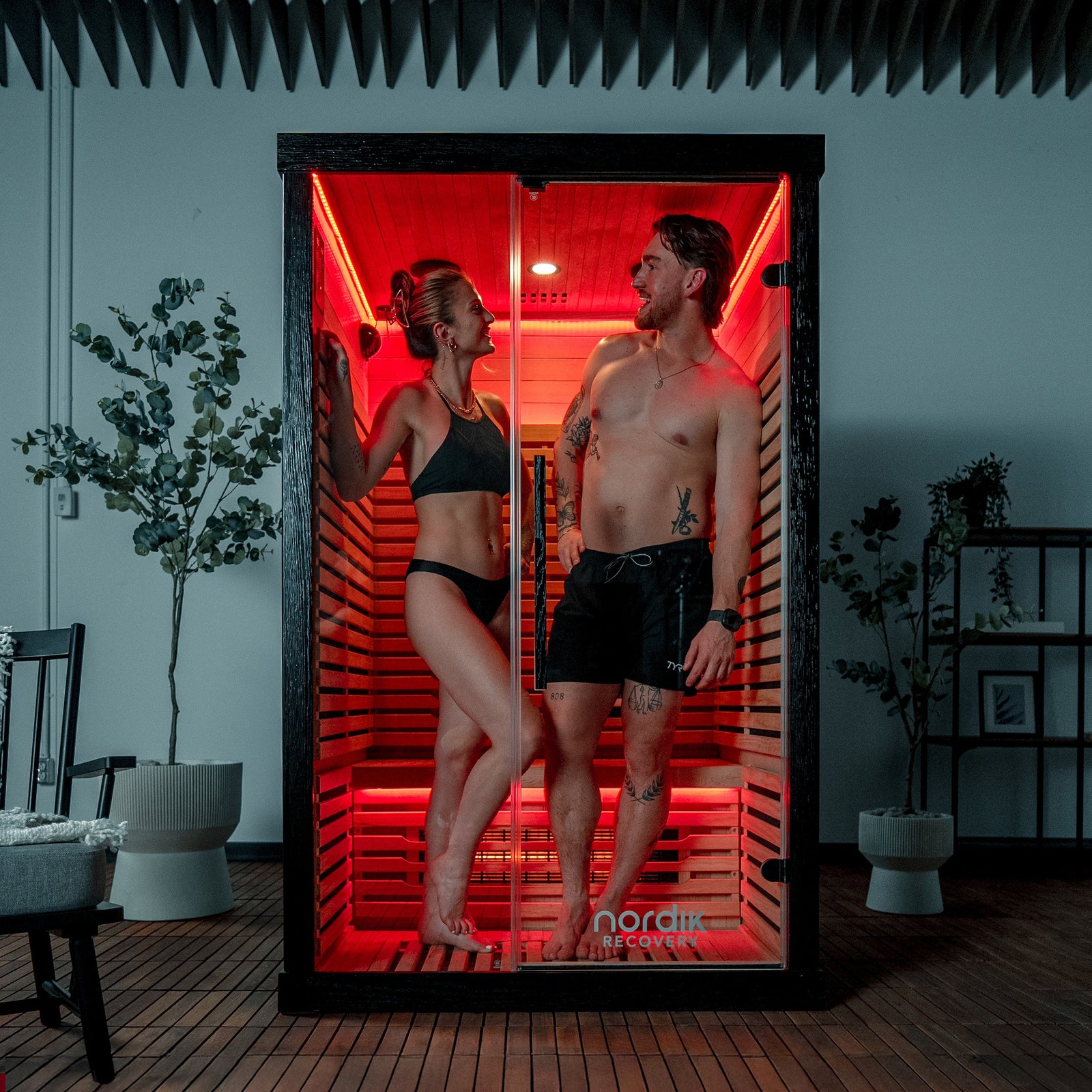
Infrared saunas in Canada cost $800 to $10,000+, but most quality home units run $2,500–$5,000 CAD — Nordik Recovery's full-spectrum, low-EMF models start at $1,999. A typical 2-person session uses 1.5–2 kWh, so daily use costs roughly $7–$15/month, less than a single spa visit. For everyday wellness far infrared is plenty; full spectrum adds skin and joint benefits. Most 1–2 person units plug into a standard 120V outlet — no electrician needed.
- Sweet spot: most quality home infrared saunas cost $2,500–$5,000 CAD; Nordik's start at $1,999.
- Cheap to run: ~$7–$15/month for daily use — it beats a weekly spa visit inside two years.
- Far infrared vs. full spectrum: FIR covers daily wellness; full spectrum adds skin (NIR) and joint (MIR) range.
- Specs that matter: low-EMF heaters (under 3 mG), Canadian hemlock, and heaters at body level — not marketing buzzwords.
- Easy install: most 1–2 person units run on a standard 120V outlet; 3-person+ may need 240V.
- Buy Canadian: insist on a Canadian warranty and an EMF test report — not a US-only redirect.
1. How much does an infrared sauna cost in Canada?CA
Infrared saunas in Canada range from $800 to over $10,000, but most quality home units fall between $2,500 and $5,000 CAD. Here's a realistic breakdown by tier.
| Tier | Price range (CAD) | What you get |
|---|---|---|
| Entry-level | $800 – $1,500 | Thin panels, poplar or basswood, basic heaters, higher EMF |
| Mid-range | $1,500 – $3,500 | Canadian hemlock or cedar, low-EMF heaters, better insulation |
| Premium | $3,500 – $8,000+ | Full spectrum heaters, chromotherapy, app control, medical-grade build |
Monthly operating cost: a typical 2-person infrared sauna uses 1.5–2 kWh per session. At Ontario's average rate of ~$0.13/kWh, that's roughly $7–$15/month for daily use — less than a single spa visit.
Bottom line: a mid-range sauna pays for itself versus a weekly spa visit in under 2 years — and it's there every day, in your own home.
🧮 Infrared sauna cost calculator
2. Far infrared vs. full spectrum: which should you buy?
This is the question we get most often. Here's the honest answer.
Far infrared (FIR) saunas emit wavelengths between 5–15 microns — the range most associated with deep tissue penetration, detoxification, and cardiovascular benefits. This is the traditional infrared sauna and what most studies reference.
Full spectrum saunas add near infrared (NIR) and mid infrared (MIR) on top of FIR. NIR is associated with skin rejuvenation and cellular repair; MIR with joint and muscle recovery. You get all three in a single session.
Which to choose
- Budget under $2,500 → far infrared is the better bet (full spectrum at this price usually means compromised build quality).
- Daily wellness (stress, sleep, cardiovascular) → far infrared is sufficient.
- Recovery + anti-aging + therapeutic use → full spectrum gives you more range.
- Serious about heat feel → full spectrum units tend to run warmer.
The Nordik Recovery 2-Person Full Spectrum Infrared Sauna uses low-EMF carbon and ceramic heater panels, Canadian hemlock construction, and covers all three wavelength ranges — the mid-to-premium option we'd recommend for daily home use. See our full comparison: Full Spectrum vs. Far Infrared →
3. What size infrared sauna do you need?
Choosing the right size comes down to two things: how many people will use it and where it's going.
1-person saunas
- Footprint: ~36" × 36"
- Best for: solo daily use, small spare rooms, apartments with storage space
- Limitation: no room to lie down or stretch
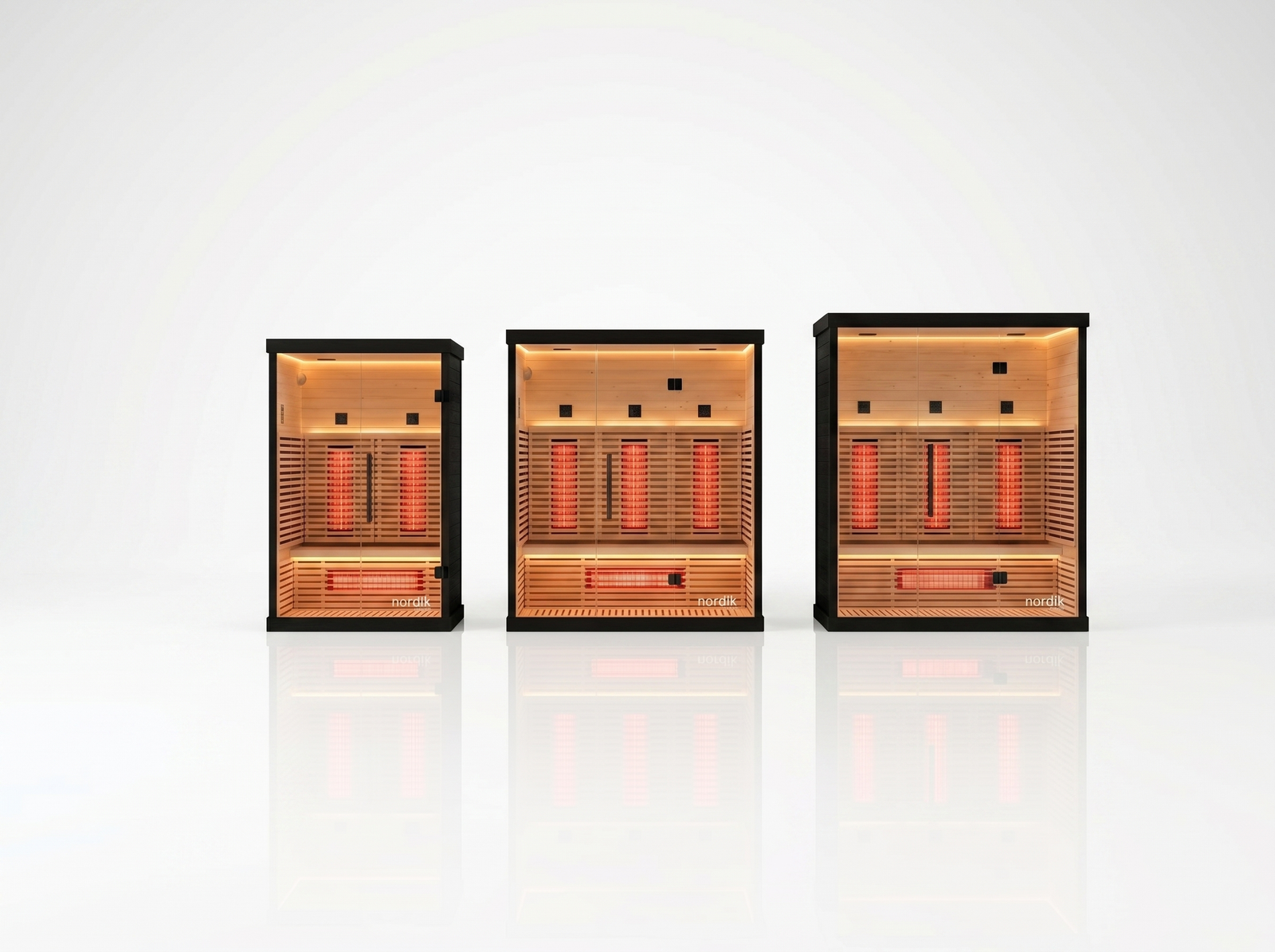
2-person saunas
- Footprint: ~47" × 47" to 55" × 47"
- Best for: couples, or solo users who want to stretch out during sessions
- Most popular category for home use in Canada
3–4 person saunas
- Footprint: 60"+ wide
- Best for: families or dedicated sauna rooms
- Require a 240V outlet in most cases
Important for Canadian homes: most 1–2 person saunas run on standard 120V (a regular outlet); 3-person+ units typically need a dedicated 240V circuit. Basements and garages work well — check for 7'+ ceiling clearance. Humidity from infrared is minimal, so no special ventilation is required.
4. What specs actually matter (and what's marketing)
✅ Actually matters
EMF levels. Low-EMF heaters are the real differentiator in mid-to-premium saunas. Look for independently tested EMF ratings under 3 mG at body distance. High-EMF heaters aren't dangerous for occasional use but matter for daily sessions.
Wood type. Canadian hemlock is dense, splinter-resistant, odour-neutral, and resists warping — the gold standard for our climate. Cedar is aromatic but can off-gas resins. Basswood/poplar is cheaper and fine for dry climates but can warp with humidity swings.
Heater type and placement. Carbon panels distribute heat evenly across the body; ceramic heaters run hotter in a smaller zone. Better units combine both. Check that heaters sit at body level — not just behind the back wall.
Assembly and warranty. Canadian purchases should come with a Canadian warranty (not US-only). Assembly ranges from 30 minutes to 3 hours; tongue-and-groove panel systems are the easiest.
❌ Marketing noise
- "Medical-grade" without certification — meaningless without a third-party EMF test report.
- Number of heaters — placement and wattage matter more than count.
- Chromotherapy — a nice add-on, not a health differentiator.
- "Negative ion generators" — negligible effect inside a sauna.
5. Should you buy indoor or outdoor?CA
For most Canadians, indoor is the right answer — and here's why.
Indoor advantages: year-round use without fighting −20 °C weather to get there, no weatherproofing, easier electrical connection, and a basement, spare bedroom, or large closet all work.
Outdoor advantages: a more natural, ritual feel, better if you're pairing with an outdoor cold plunge, and larger models are easier to situate outside.
The Canadian winter reality: an outdoor sauna in Montreal or Calgary needs to be rated for outdoor installation, and you'll want a covered structure or insulated enclosure. The unit itself handles cold fine — getting to it is the real UX problem.
6. What to look for when buying from a Canadian retailerCA
Whether you're buying from a specialty store, an online retailer, or a big-box like Costco, run this checklist before you buy:
- Canadian warranty (not a US redirect)
- EMF test report available on request
- Wood species clearly stated (not just "natural wood")
- Heater specs listed (carbon vs. ceramic, wattage, placement)
- Voltage requirements confirmed (120V vs. 240V)
- Return policy clearly stated — saunas are large freight items
Costco and big-box: often carry decent entry-level units at competitive prices, but with limited warranty support and no way to compare specs in person. Fine for casual use, not ideal for daily therapeutic sessions.
Specialty Canadian retailers (like Nordik Recovery) ship direct, offer real support, a Canadian warranty, and better-vetted product lines.
7. The best 2-person infrared sauna under $3,000 in Canada
If you're looking for the best value in the mid-range — the most-searched category in Canada — here's what to look for at this price:
- Low-EMF carbon heaters (not just "EMF-free" marketing copy)
- Canadian hemlock or equivalent wood
- 120V compatible (no electrical work required)
- Warranty covering both parts and labour in Canada
The Nordik Recovery 2-Person Full Spectrum Infrared Sauna hits these marks: Canadian hemlock construction, low-EMF full spectrum heaters, a standard 120V outlet, and a Canadian warranty. It's built for daily home use and ships across Canada with free delivery. View the 2-Person Full Spectrum Infrared Sauna →
The biggest mistake I see is buying on price alone. A cheap, high-EMF sauna you use twice a month is more expensive than a well-built one you use daily. Match the unit to how often you'll actually sit in it — that's the spec that pays you back.— Nordik Product Specialist, Montreal
Find your perfect sauna in 2 minutes
Answer a few quick questions about your budget, size etc. and get matched to the right sauna. Plus price-drop alerts.
Frequently asked questions
Is it safe to use an infrared sauna every day?
Yes — for most healthy adults, daily sessions of 20–45 minutes at 120–140 °F are safe. Start with 15-minute sessions if you're new to infrared. Consult your doctor if you have cardiovascular conditions, low blood pressure, or are pregnant.
How hard is it to install an infrared sauna yourself?
Most 1–2 person units assemble in 30–60 minutes with no tools beyond a rubber mallet. Tongue-and-groove panel systems are easiest. You need a standard 120V outlet nearby — no electrician required for most models.
Do infrared saunas get hot enough to feel like a real sauna?
Infrared saunas run 110–150 °F vs. 180–200 °F for traditional saunas. The heat penetrates the body directly rather than heating the air, so most users report an intense sweat at lower air temperatures. It's not identical to a Finnish sauna, but the therapeutic effect is comparable.
Can I put an infrared sauna in my basement?
Yes — basements are ideal. You need at least 7' of ceiling height, a standard 120V outlet within reach, and a reasonably level floor. No special ventilation is required and moisture output is minimal.
What's the difference between cheap and expensive infrared saunas?
At the low end: thin walls, higher EMF, cheaper wood prone to warping, and weaker heaters. At the mid-to-high end: better insulation (faster heat-up, lower electricity use), low-EMF carbon heaters, durable hardwood, and longer warranties. The difference is noticeable within the first few months of daily use.
Are infrared saunas worth it for daily use?
For stress, sleep, and recovery — yes. The research is strongest on cardiovascular benefits, stress reduction, and muscle recovery, and the payoff vs. spa visits is clear after the first year. The caveat: it requires dedicated space and an upfront investment. If you'll use it 3–4× per week, it's worth it.
How we sourced this guide: figures reflect current Canadian retailer pricing (including Nordik Recovery's live catalogue), provincial utility rates, and EMF/wood/heater norms as of mid-2026, in CAD. Prices vary by region and change over time; always confirm with a local quote.