

 CAN
CAN
 US
US


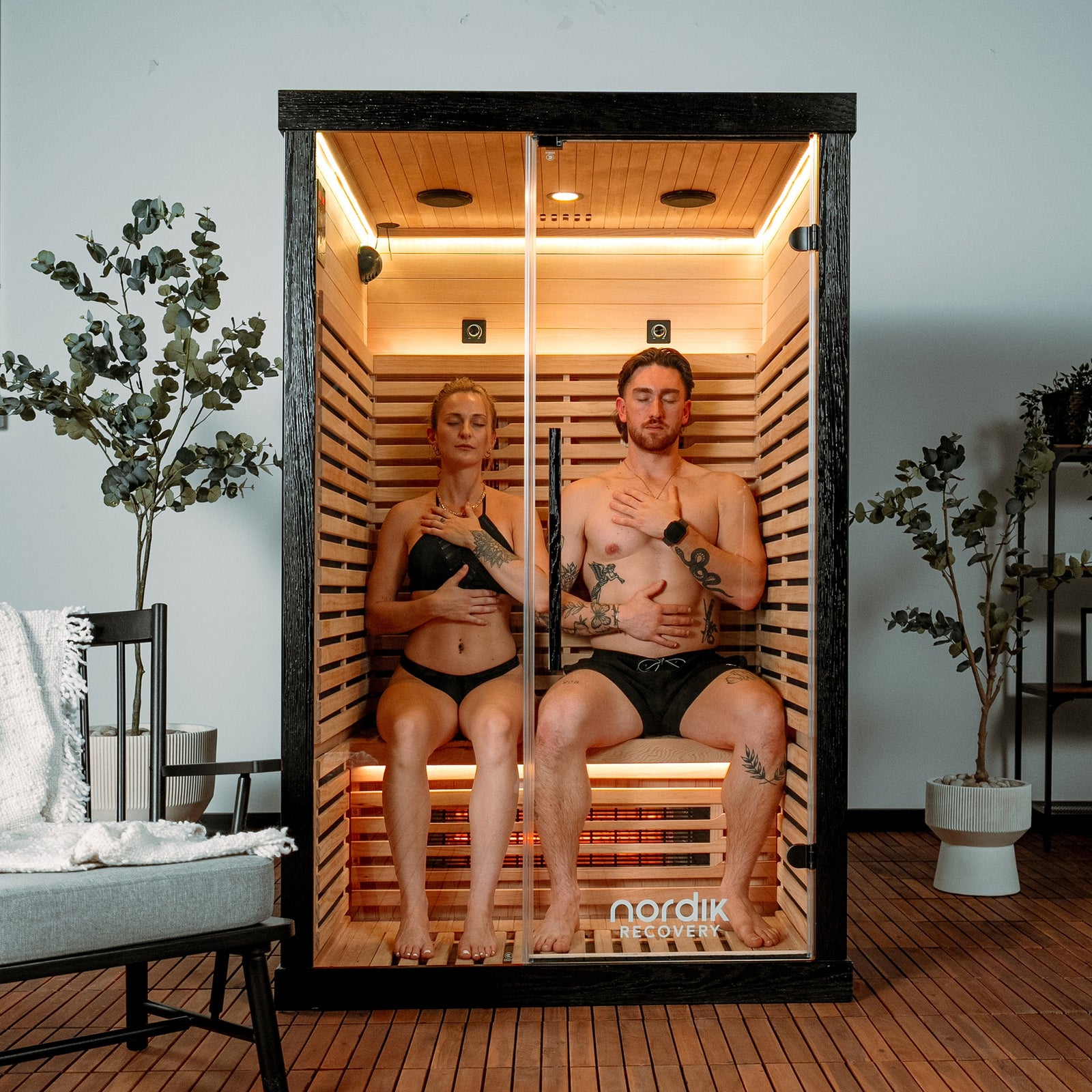
Far infrared (FIR) saunas cover the basics — deep tissue heat, detox, and cardiovascular benefits — and are excellent for daily wellness. Full spectrum saunas add near (NIR) and mid (MIR) infrared on top, expanding a single session to skin repair, joint recovery, and faster muscle healing. If you want the widest therapeutic range from one unit, full spectrum is worth the investment; for everyday stress, sleep, and recovery, far infrared is plenty.
- Far infrared = the proven core: FIR (5–15 μm) drives deep heat, detox, and cardiovascular benefits — the most-studied range.
- Full spectrum = FIR + NIR + MIR: adds skin/cellular repair (NIR) and joint/soft-tissue relief (MIR) in one session.
- EMF is about build, not type: a well-built full spectrum unit can have lower EMF than a poor FIR-only one — always ask for a test report.
- Price: far infrared $1,500–$4,000; full spectrum $2,500–$6,000+ in Canada.
- Our take: a well-built full spectrum unit in the $2,500–$3,500 range is the better long-term buy for most first-time Canadian buyers.
1. What each wavelength actually does to your body
The difference between far infrared and full spectrum comes down to which infrared wavelengths the heaters emit — and each does something different.
| Wavelength | Range | Primary effects |
|---|---|---|
| Near infrared (NIR) | 0.7–1.4 μm | Cellular repair, collagen production, skin rejuvenation |
| Mid infrared (MIR) | 1.4–3 μm | Joint and soft-tissue penetration, circulation, pain relief |
| Far infrared (FIR) | 3–1000 μm | Deep tissue heat, core temperature rise, detox, cardiovascular |
Far infrared saunas emit FIR only — typically 5–15 μm, the range most studied for cardiovascular and metabolic benefits.
Full spectrum saunas emit all three — NIR, MIR, and FIR — usually via a combination of carbon panel and ceramic heaters, so you get the full therapeutic range in a single session.
Important: most infrared sauna health research references far infrared specifically. The NIR and MIR benefits of full spectrum are supported by separate bodies of evidence (photobiomodulation research, physical-therapy literature). Both are legitimate — they're just different mechanisms.
2. Side-by-side: far infrared vs. full spectrum
| Far infrared | Full spectrum | |
|---|---|---|
| Wavelengths | FIR only | NIR + MIR + FIR |
| Typical temp range | 110–140 °F | 120–150 °F |
| Heat feel | Gentle, even | Slightly more intense |
| Best for | Daily wellness, stress, sleep, cardio | Recovery, skin, joints + all FIR benefits |
| Price range (Canada) | $1,500–$4,000 | $2,500–$6,000+ |
| EMF consideration | Same — depends on heater quality, not wavelength type | |
| Research backing | Strong (FIR specifically) | Strong (FIR) + emerging (NIR/MIR) |
3. Who should buy which
Choose far infrared if:
- Your budget is under $2,500
- You want daily use for stress, sleep quality, and general recovery
- You've never owned a sauna and want to start with the proven option
- You're primarily drawn to the cardiovascular and metabolic research
Choose full spectrum if:
- You want a single unit that covers the widest therapeutic range
- You're serious about skin health and cellular repair (NIR is the key)
- You have joint issues, chronic muscle tension, or do high-intensity training
- You're buying once and want room to grow your wellness practice
For most Canadians buying a home sauna for the first time, a well-built full spectrum unit in the $2,500–$3,500 range is the better long-term investment — you're not paying for features you won't use, and you're not leaving therapeutic range on the table.— Nordik Product Specialist, Montreal
4. The Nordik Recovery full spectrum sauna
The 2-Person Full Spectrum Infrared Sauna is built for daily Canadian home use:
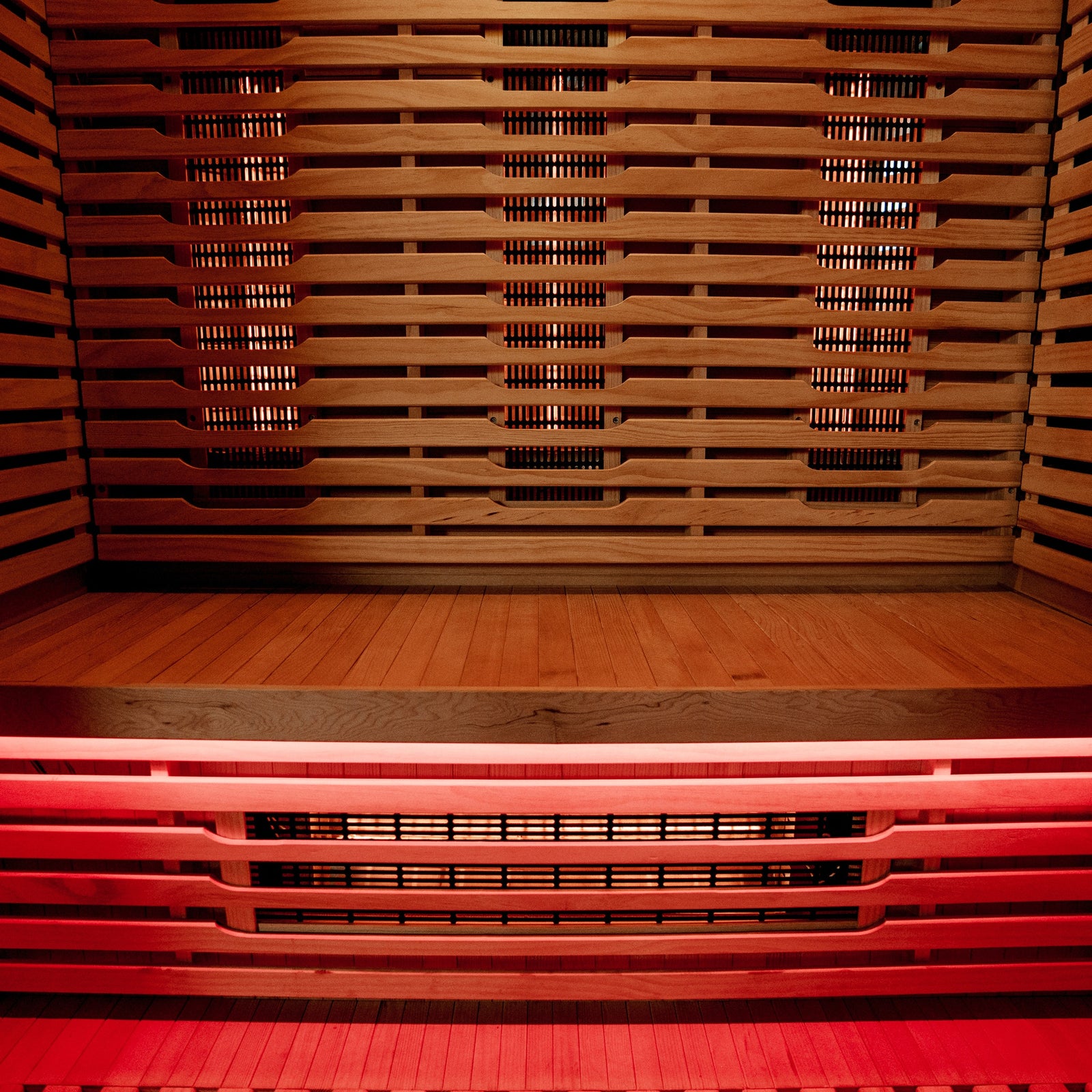
- Full spectrum heaters: carbon + ceramic combination for NIR, MIR, and FIR coverage
- Low-EMF panels: independently tested — under 3 mG at body distance
- Canadian hemlock construction: dense, warp-resistant, odour-neutral
- 120V compatible: standard outlet — no electrician needed
- Ships across Canada: free delivery, Canadian warranty
Find your perfect sauna in 2 minutes
Answer a few quick questions about your budget, size etc. and get matched to the right sauna. Plus price-drop alerts.
Common questions
Does full spectrum mean more EMF?
No. EMF output depends on heater quality and shielding — not on whether the sauna is full spectrum or far infrared. A well-built full spectrum sauna can have lower EMF than a poorly built FIR-only unit. Always ask for an independent test report.
Is full spectrum worth the extra cost?
If the price gap is $200–$500 and you're buying a quality mid-range unit, yes — the added NIR and MIR range is worth it. If the gap is $2,000+, the upgrade may reflect brand premium more than heater performance. Check the specs.
Do full spectrum saunas get hotter?
Slightly. Full spectrum units tend to reach 140–150 °F vs. 120–135 °F for most FIR-only models. The difference in perceived heat is noticeable but not dramatic. Both run much cooler than a traditional Finnish sauna (180–200 °F).
Is there research supporting full spectrum over just far infrared?
The cardiovascular, detox, and metabolic research specifically references FIR wavelengths. NIR benefits are well-supported in photobiomodulation research (wound healing, skin rejuvenation, cellular repair); MIR evidence is growing, particularly for joint and soft tissue. Full spectrum isn't a gimmick — it's additive.
Can I use a full spectrum sauna every day?
Yes. Daily sessions of 20–45 minutes are safe for healthy adults. Start at 15 minutes if you're new. The full spectrum wavelengths don't change the safety profile vs. FIR-only saunas.
How we sourced this comparison: wavelength ranges and effects reflect published infrared and photobiomodulation literature; prices reflect current Canadian retailer pricing (including Nordik Recovery's live catalogue) as of mid-2026, in CAD. This guide is educational and not medical advice — consult your doctor before starting sauna use.